

The Sand Dam
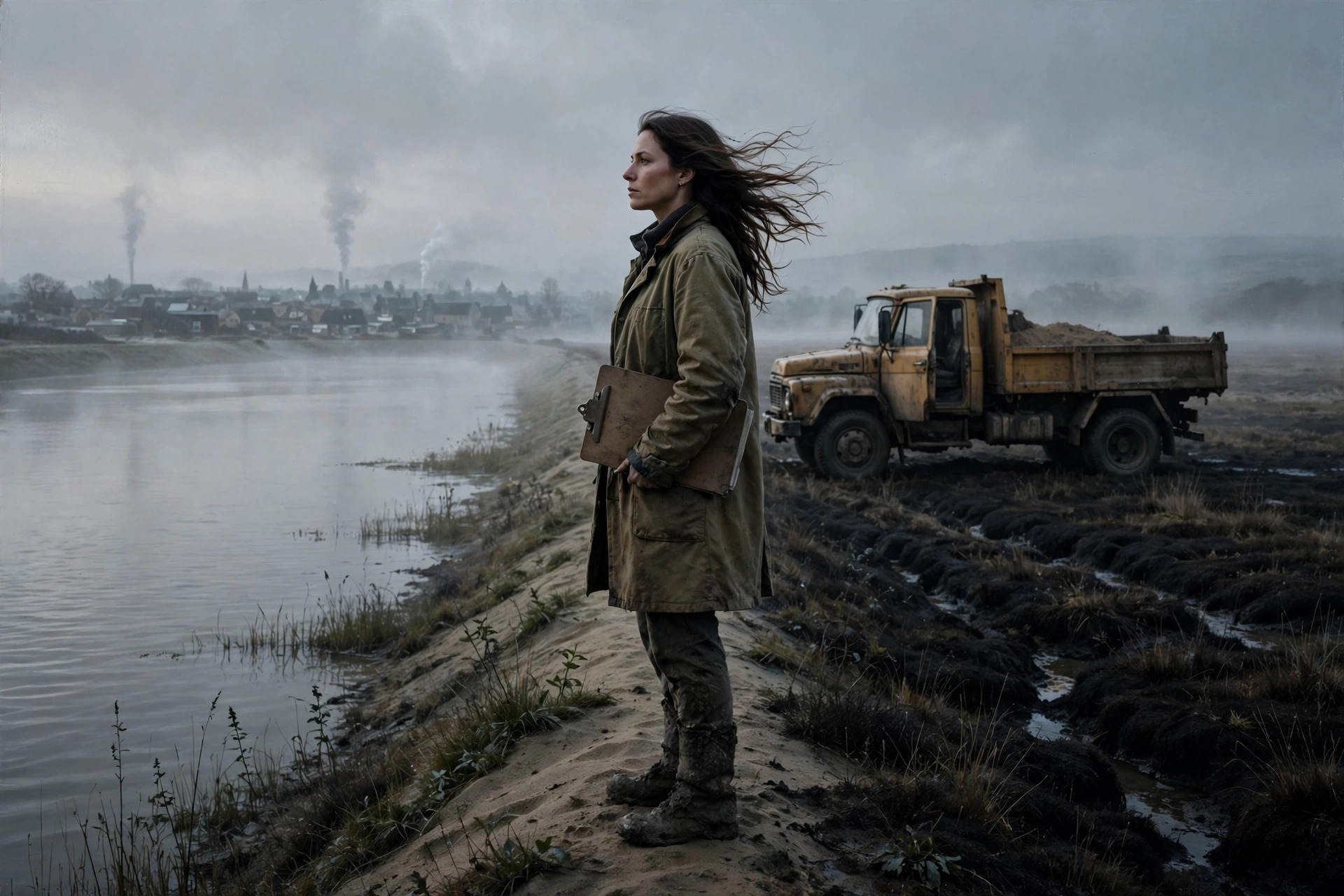
Rufus Quist put the truck sideways on the crown of the dike and killed the engine, and the wind came off Kettle Bog Reservoir and took the door out of Nell Ferraro's hand. She got her boots into sand that had been wet once and dried in ridges, and stood a moment letting the place arrange itself: the water on one side, grey and shallow-looking, the bog on the other, black and cut into rectangles by ditches, and beyond the ditches the low town with its smoke standing straight up.
"Crown's soft here in spring," Rufus told her. "You'll want to walk it while it's dry."
Halvard Voss was already down the slope with his hands behind his back, a big slow-moving man in a canvas coat gone the colour of the sand. He did not wait to be caught up with. Nell came after him with the field book against her ribs, and Rufus followed at his own pace, stopping to look at the water the way men look at a thing they have looked at all their lives.
The staff gauge stood in a still corner behind the intake, white paint on a board, weed at its foot. She crouched and read it and wrote what she saw, and then read the file copy again out of her notes, the level the co-op had reported for the season, and the two did not agree by enough to matter and by enough to be worth a line. Halvard watched her do it.
"You'll find our paperwork honest," he said. "You won't find it tidy."
"Tidy's not the job." She straightened. "Show me the toe."
He took her along the downstream face where the sand met the grass, and it was there, in a long shallow crescent that the mowing had gone around, that the ground gave under her heel and came up wet. She knelt. The turf had sloughed in a lip, the way a bank slides when water has been working out of it from inside, and the sand beneath was dark and cool and smelled of iron. She pressed her thumb into it and the print filled.
"There's no seepage in your return," she said. "Not a line about the toe."
"Ground's low there. Always been low." Halvard's boot came down beside her knee, not on the wet. "Rufus, is that low ground?"
"It's low," Rufus said, and looked at the reservoir.
She wrote it down in front of them both: toe wet, turf sloughed, seepage not reported. She wrote the shape of the crescent and where the mowing stopped. Halvard waited with the patience of a man who has been inspected before and expects to be inspected again, and when she stood he turned and went up the slope toward the release works without any change in his face at all.
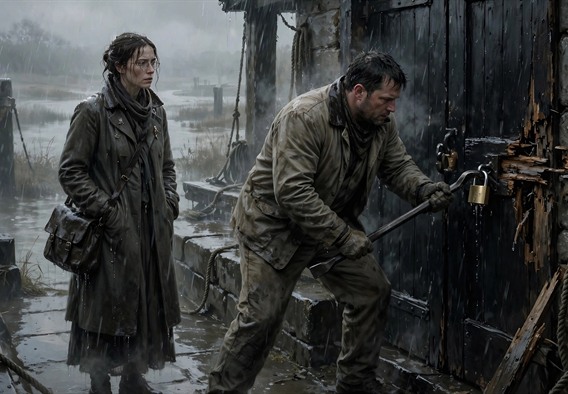
The scour sluice sat in its concrete bay at the end of the training wall, gearbox above, chain running down over a sprocket to the wheel, and the wheel hung with a chain and a padlock through the chain's link. The lock was brass and bright. The gearbox beside it was painted the same green as everything else and the paint had lifted and gone chalky, and the hasp had fresh screw heads in old wood.
"Before you ask," Halvard said, "nobody opens this until the race has been walked and called clear. Not for me, not for the co-op. And there's one key." He brought it up off his chest on its leather lanyard, brass, worn pale at the shoulder of the blade. "It goes out of my hand into a hand, and it comes back into my hand. That's the whole of it."
"Show me the wheel free."
He put the key in and turned it and lifted the lock off, and the chain fell with a flat clatter against the concrete, and he took the wheel a quarter turn each way and let it come back. The lock hung open in his fist. Then he closed it through the link again, and dropped the key down inside his coat, and the lanyard swung once and settled.
"Changed the lock out," he said, seeing her look at the hasp.
"When?"
"It got to where you had to jiggle it." He wiped his palm on his coat. "You'll want a signature that I showed you the works. Where do you want it."
She held the clipboard out and he took his own pen from the breast pocket, a ballpoint rubbed shiny where his thumb sat, and signed the attendance line pressing hard, the way men write on a counter with a bad pen. When he handed it back she turned the sheet and ran her thumb over the reverse and felt his name standing up out of the paper in little ridges.
"I'll need the release history," she said. "Every off-schedule draw you've got paper for. The permit renewal won't move without it, and I can't certify the toe with the file the way it stands."
Halvard looked out at the bog for a while.
"You'll get paper," he said.
Rufus had come up onto the concrete and was standing with his cap off, drying his forehead with a folded handkerchief. "You'll get paper," he agreed. "You won't get the seep autumn. Rushwater doesn't discuss the seep autumn." He put the cap back on and settled it with both hands. "That's not me being difficult with you. That's how it is here."
"I'm not asking anybody to discuss anything. I'm asking for a records book."
"Sure," Rufus said, and went to start the truck.
The scale house stood where the sand road came out past the loading face, a shed on stilts with a beam and a dial and a window that slid. Ilona Rask took the truck's ticket without looking up, wrote the tare, worked the poise along the beam with two fingers until it floated, and stamped the sheet and pushed it out through the window. Her hands were quick and her face was not interested. There was a chair behind her with a cushion on it and a coat over the chair back, and she did not sit down.
"Rask," Nell said. "Your husband worked the trash rack here."
The poise went back to its notch. Ilona squared the tickets into a pile and put a stone on them, because the window was open and the wind was coming through.
"The hall has the paper," she said.
"I'm going to the hall."
"Then you'll be told." She looked at Nell then, straight on, long enough that Nell understood she was being measured for something and had been found light. "Mind the beam, it swings."
The Rushwater Growers' Co-operative Hall smelled of coffee and floor oil. Margit Voss came out of the kitchen wiping her hands and put a plate in front of Nell before Nell had asked for anything, bread and cold pork and a spoon of something sharp and green, and stood over her while she ate the first of it, and only then let her talk.
"The consent book," Nell said. "The flood-order slips. I need the nights, not the accounts."
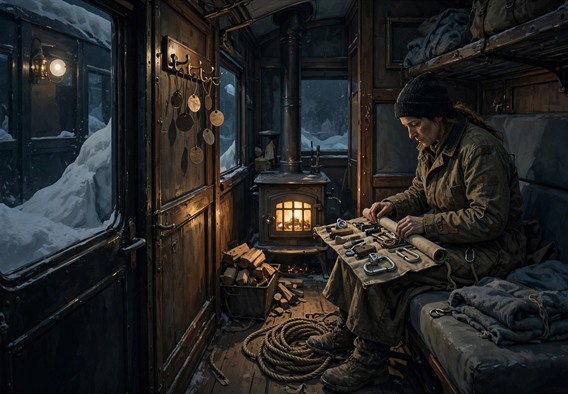
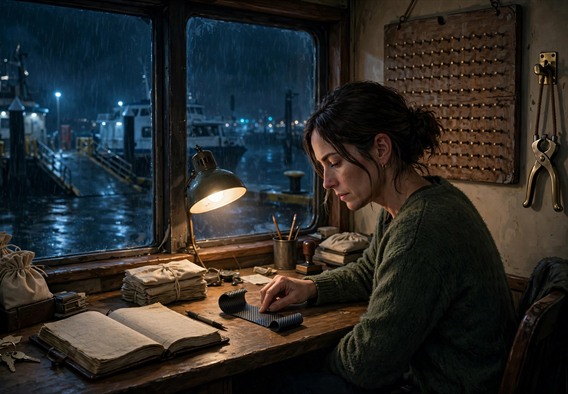
"It's not accounts." Margit's chin came up a little, pleased. "It's permissions. Who was set to what work, and at the foot, who asked for water out of turn and put their name to it. The pad makes three copies. White top stays with me, second goes to the grower, third goes to the man doing the work, so nobody can say afterward they weren't told." She lifted the plate an inch and set it down again. "I punch them and screw them myself. Brass posts, canvas cover. It'll outlast both of us."
"Then let me read it. Today, if you've a minute."
"The book's shut till the trustees sit." Margit was already moving behind the counter to the office door, and she said it kindly, the way she had said everything. "You'd not want me opening it for one person and not the next. Have the rest of that, there's more."
She went into the office. Nell heard the drawer run out on its runners, and the sound of something heavy set flat inside it, and the drawer run home, and the small dry click of the lock. Margit came back with the key already going into her apron pocket and her hands already reaching for the plate.
"You'll stay at Alma's," she said. "Everybody stays at Alma's."
The Warming House had a lamp on in the front room and a table laid for more people than were in it. Alma Quist took Nell's bag up the stairs herself and opened the door at the end of the landing, the good room, the one with the window over the yard and a quilt on the bed that had been made by somebody who had time.
"Rufus says you're at the dam."
"I'm at the dam."
Alma set the bag on the chair and smoothed the quilt where it did not need smoothing. "Winter flood'll be on us before you'd think. We've sand to move and a permit to get and people here who've not much margin." She looked at the window, not at Nell. "Do your work. Only don't make trouble before the water comes."
Nell said she would do her work, and Alma went down to her kitchen, and after a while Nell went out to the truck in the yard to get her boots.
The clipboard lay on the dashboard where she had left it, the printed certification page still blank under her field sheets, the numbered box at the foot of it empty and waiting for her name. On top sat the page she had written on the concrete: padlock newer than gearbox, hasp reset, key one only, hand to hand. Toe wet, sloughing, unreported.
She read it twice in the light off the kitchen window. Then she set the sheets square, and left the certification page blank, and sat looking at the hall's dark end of the road, where a drawer was locked with the town's permissions inside it and a woman was washing plates.
Brass Screw Posts
Margit came out of the office with the consent book flat against her forearm and a torn slip pinched between two fingers, and she set both down on the hall table under the lamp before she took off her apron.
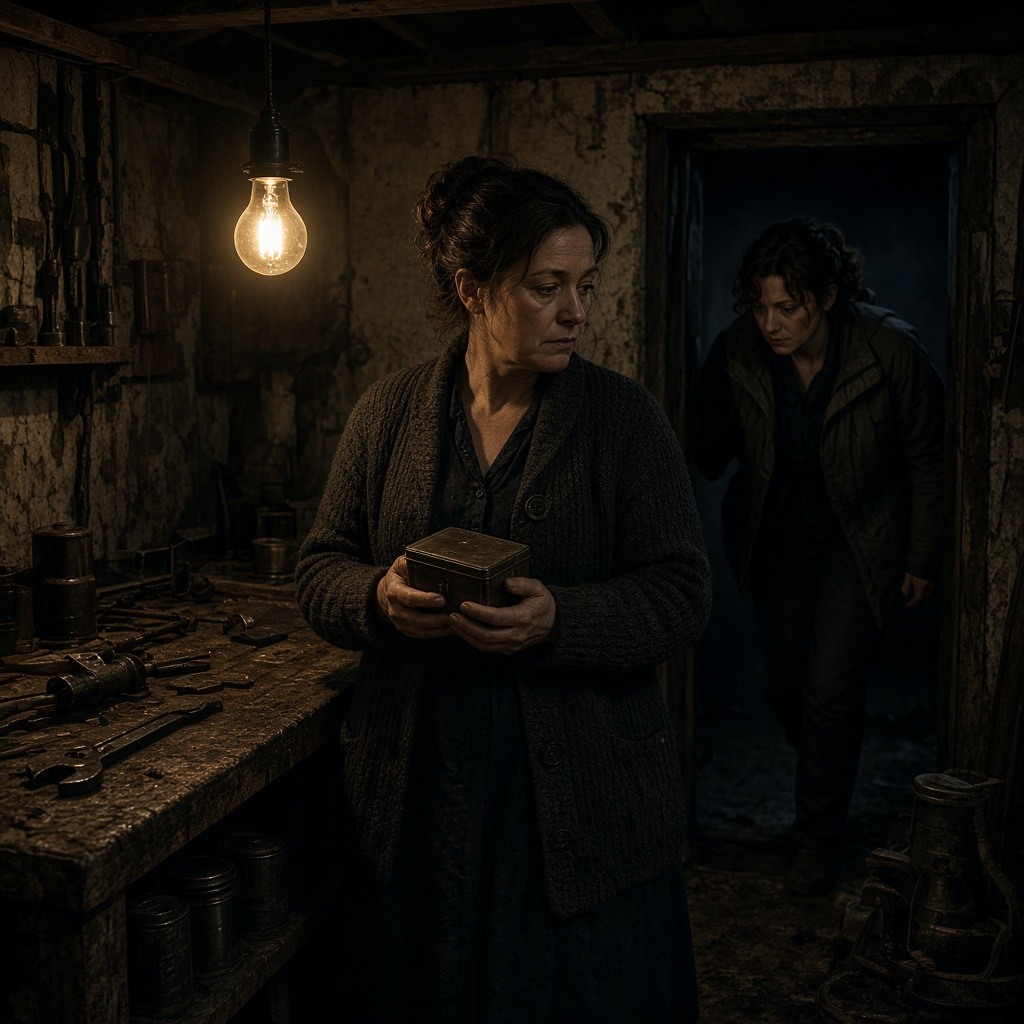
"Rufus tore this pulling it out to show the trustees," she said. "It'll catch on the post and take the next sheet with it. Sit, you can read while I mend. I'll not have you standing over me like a man from the bank."
Nell sat. The canvas cover had gone soft at the corners the way canvas does when it is handled every week for years, and the brass screw posts stood up through the punched holes with their caps lying beside them in a saucer, and Margit turned the sheets with the flat of her hand, not her thumb, looking for the tear.
Alma came in from the yard with a stack of plates balanced up her arm and the cold coming off her coat. The sand crews ate at the hall on nights they were loading late, and she brought the food up from the Warming House in a covered pan and went back for more bread, and the trucks went by the windows with their lights swinging across the ceiling.
"You'll want the seep autumn," Nell said.
"I'll want this slip mended." Margit found it, laid the tape along the tear, and pressed it down with the back of a spoon. Then she turned back through the book, past the dry summers, past a spring somebody had written gate stuck across in grease pencil, and stopped. "There. That's the year the toe ran."
The sheet was heavy rag paper, ruled by a job printer, with a line at the head for the night's work and a line at the foot for whoever asked for water off the schedule. The assignment line was filled in a small upright hand that Nell had seen that morning on the co-op's return forms, the letters standing separate like fence posts. Rake rack, tailrace. T. Rask.
"Halvard writes the assignments," Margit said, following her eye. "Always has. The men sign under him for the consent."
The signatures ran down the sheet in pencil, grower after grower, some of them just a mark and initials. At the foot, on the order line, somebody had written Draw scour, off schedule and signed it T. Rask, and that line was in ballpoint. Blue. It lay on the paper with a slight shine to it where the pen had gone over a letter twice, and every other entry on the sheet was grey graphite that had sunk into the tooth of the paper.
"He had a pen," Nell said.
"Men carry what they carry." Margit licked her finger and smoothed the tape. "Rufus signs in pen when he's been at the fuel dock. It's not a religion here, what you write with."
Nell brought the clipboard onto the table and turned past the printed certification page, still blank, to her field sheets, and began to copy the sheet out by hand: the assignment, the initials in their order, the words on the order line and the name under them. She wrote ballpoint in the margin and drew a small box around it. Margit watched her write and said nothing about it, which was its own kind of comment.
Halvard came in with his boots wet to the laces and stood at the end of the table looking at what she was doing. His coat was open. The leather lanyard hung inside it, and the brass on the end of it swung once and settled against his shirt.
"You're at the old sheet."
"I'm at the old sheet."
He pulled out a chair and sat with his forearms on the table. "The rack hand asked for water. He was raking the rack and he wanted the draw to pull the trash off it, so he asked, and I gave it. He went down before it came." He said it the way he had said the reservoir levels that morning, without heat and without hurry. "Nobody's fault. The state looked at it and closed it. There's a finding in a drawer in the county seat with all of that in it, and you can read it there if you like."
"He went down into the tailrace."
"He went down to the rack. That's where a rack hand goes." Halvard turned his hand over on the table. "You've seen the toe. You've seen what that dam does when it's full. I've a permit to keep and a town under me, and I'll not pretend the water is a pet."
"The toe isn't in your return."
"The toe is in my head, and it'll be in your report, and you'll tell me what you want done to it and I'll do it." He looked at the lamp instead of at her. "I've not slept a whole night through in the wet season since I took this work."
Margit got up and put the kettle on the hall's little stove, because the boiler pump was down again and Teresita had promised to come at it after the pumps at the bog were running, and there was tea to be made in the meantime. She talked while she did it, in the same warm voice she had used over the plates.
"You'll have seen the aid claim in the file. The fund pays out on a member killed at the work. Twenty-two thousand dollars, and it's not charity, they've paid into it every season since the hall was built." She set the cups out. "Only it doesn't pay where the man's own hand did it. That's the rule, and it's a fair rule for a fund, you can't be paying men for their own carelessness with the other men's money. The finding named Teodor's own hand. He asked for the water and he went down under it. So the trustees wrote to the fund and the fund wrote back, and Ilona got the letter."
"She kept the letter?"
"She kept everything." Margit brought the cups over. "They gave her the scale-house instead. Tickets and weights, out of the wind, and it's paid every week of the season. She hates it. She'd sooner be in the bog with her hands in the muck than sit in that box watching other people's sand go by, and she sits in it, and she's never once said a word to me about the letter."
Alma came through with the plates stacked against her chest and the crews' forks bundled in a dish towel, and she stopped at the end of the table to let Margit get the stove door shut.
"Ilona's never come to supper," Alma said. "Not once, all these years. I've asked her at the scale-house and I've asked her at her gate. She says she eats at home." She shifted the plates higher. "There's more bread if Halvard's staying."
Then she went out, and the door let in the sound of a truck taking the sand road slow, and Margit said the bread was fine, and Halvard said he'd not stay.
Nell put her pencil down. "Who else was in the tailrace that night?"
Halvard's shoulders went up and came down. "Sand men. Gate hands. It's a race, not a room, there's people through it all season." He stood, and the brass swung inside his coat. "You'll want to see the release works in daylight. Come at first light and I'll have the chain wheel unlocked for you, and you can count the turns yourself."
"I'd like the names of the gate hands."
"I'd like a dam that doesn't slough." He put his chair in. "Margit, tell her about the winter flood. She's writing everything down and she's not written that."
So Margit told her about the winter flood, and how the sand had to be out of the bog before the water came, and how the permit was the whole season's bread, and Nell let her tell it and wrote none of it.
When Margit went to the stove for the pot, Nell took the cap off the near post and lifted the seep-autumn sheet up over the brass, and turned it, and held it under the lamp.
The back of every other sheet in the book was grey where the carbon had pressed through, cloudy under the signatures, darker where a man had leaned on his pencil. The back of this one was cloudy at the head, under the assignment line, under Rake rack, tailrace. Down at the foot, where the order line sat on the front, the paper was clean. Not pale. Clean, the rag fibre still open, nothing pressed into it at all.
She held it there while Margit came back with the pot, and Margit looked at the back of the sheet and then at the lamp and reached past her for the saucer.
"Mind the tear," Margit said, and slid the sheet down over the posts, and screwed the cap on, and turned it tight with her fingers.
Nell laid her copy flat beside the book and did not touch it, and the graphite on the order line still smeared when the lamp heat moved the air above it.
The Dead Key
Nell came down the release works at first light with the clipboard against her hip, and the scour outlet running a thin tongue of water into the channel, and nobody on the bank to meet her.
The chain wheel stood above the outlet on its pedestal. She climbed the steps and took hold of the rim and it would not move. The padlock sat shut through the hasp, and the brass that opened it was somewhere up the sand road inside Halvard Voss's coat, because there was one key and he held it, hand to hand and back again. She let go of the rim. The gearbox under her palm was painted the grey of every other piece of iron in Rushwater, grey gone chalky, rust weeping at the bolt heads. The hasp was bright. Not polished. New, the galvanising still spangled, its screws driven into holes drilled through old paint.
She wrote the hasp into the field book beneath the lines she had copied out of the consent book the evening before, and left the certification page blank behind it. Then she went on downstream, where the discharge culvert came out under a stand of willow, to the Amado Pump House.
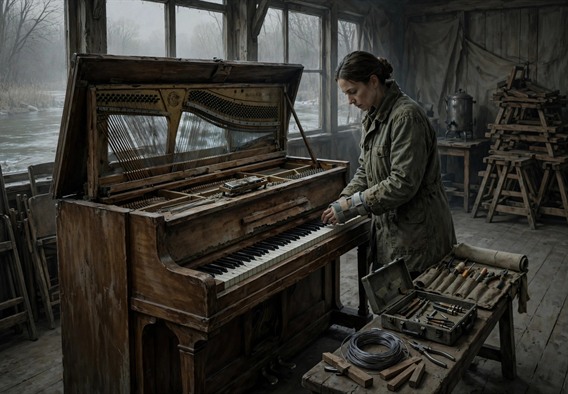
Teresita Amado had a pump gland open on the bench by the window. The brass follower lay in a rag, the sleeve stood up in a jar of solvent, and the old packing came out of the stuffing box in black rings that she dropped into a tin lid, one after another, without looking at where they fell. Consuelo Amado kept the stove at the other end of the room and had the lid off a pot before Nell had the door closed.
"Sit where the heat is," Consuelo said. "You've been on the water since it was dark."
"Since it was grey."
"That's what I said."
Nell put the clipboard on the bench, well back from the solvent, and asked Teresita how far the scour gate had to come up to pass a full draw.
Teresita told her. She said the turns to full open, and the turns back down to seat it, and the small take-up at the end where the gate took its slack, and she said all of it the way a person says a phone number they have never once had to look up. Then she wiped her fingers on the rag and asked what the file said.
Nell turned to the drawing in the permit packet, the sheet with the county seal in the corner and the gearbox drawn in elevation, and read the figure printed beside the wheel.
"That's wrong," Teresita said. "That would leave it hanging. You'd feel it hang and you'd keep winding, and then you'd have a gate you can't seat and a race you can't close." She went back to the packing. "That drawing's been in the file since before I came. Nobody's asked me for it."
"I'm asking you for the grate, too. The trash rack in the tailrace."
What she got then was better than anything in the packet. Teresita described the bars and the way they leaned, the gap at the third panel from the wall where a bar had been straightened and never replaced true, the lip of the walkway that stood out over the water so that a rake handle would catch under it if you brought the rake up flat. She said where the current went when the gate was cracked and where it went when the gate was wide, and how it changed under your boots before it changed at the surface. She said the drawing showed the rack square to the channel and the rack was not square to the channel, it sat skewed because the wall had been built out into it, and a man working there had his back to the outlet and the noise of the water in front of him.
Nell wrote until her hand ached. Consuelo put a plate at her elbow, bread and eggs and a spoon of something dark out of the pot, and stood over her until she picked up the fork.
"The lock's new," Nell said, with her mouth full, because it was easier that way. "The hasp on the chain wheel. Everything else on that pedestal is old. Somebody drilled new holes."
Teresita set a ring of packing into the box and seated it with her thumbnail.
"Changed after."
"After what?"
"After." She reached for the next ring. "Lock went, we got another. County-seat locksmith cut it. Halvard carries it."
"After the seep autumn."
The thumbnail went on working. Consuelo turned a slice of bread on the stove plate with her fingers and did not look up either.
"You'd have to ask him," Teresita said.
There were keys on a split ring at her belt, pump-house keys, a padlock key with a red plastic cap, and one small brass key worn nearly smooth, its cuts rounded off, the ring's split prised open and closed again so many times the metal had whitened at the gap. Nell asked about that one. Teresita took the ring off her belt and held it out flat on her palm.
"Doesn't fit anything."
"May I?"
"You can try it. It won't turn."
They went up the bank together, Teresita with the ring in her fist, and stood on the pedestal steps in the wind off the water. Nell put the worn brass into the padlock. It went in most of the way and stopped, and she worked it gently, and it would not turn, and the keyway was a different shape from the blade, and she could feel that even before she took it out and looked at the two of them side by side, the old key and the new lock, in her hand.
"Told you," Teresita said, and started back down.
Inside, Consuelo had poured coffee. Nell drank some and set the cup down and asked, because she had it written and could not unwrite it, who had been in the tailrace on the night of the draw.
"I was at the hall that night," Teresita said. "Signing. Trustees had the office shut and the light on late, and I was in the passage with the sand men."
"All night?"
"Long enough."
Nell let the silence sit and then asked about the phone on the pump-house wall, the one with the co-op's number written on the plaster beside it in pencil.
"He rang me," Teresita said. "That's how I…" She stopped. Her hand went to the gland follower and turned it over on the rag. "The hall phone. I was at the hall."
"Which one?"
"I said where I was."
Consuelo came down the room with the pot and filled Nell's cup again without being asked, and kept her hand on the back of the chair.
"You know what the fuel comes to, for a winter? You don't, nobody does until the bill's in their hand. Wood, oil, the truck, the flour, the beans, the coffee, the boots. It rides on the pump crew. It rides on her." She nodded at her daughter's back. "Pumps stop, wages stop. Wages stop, we're cold in a house that's already paid for. That's the whole arithmetic. The permit's the season, the season's the wages, and there's men in this town who'll tell you anything at all before they'll let the season go."
"I'm not the police," Nell said. "I write down what the iron does. Then somebody in an office decides whether your permit is worth the paper."
"And you'll write down what I just said?"
"No."
Consuelo patted the chair back twice and returned to the stove, and Nell liked her, liked the bread and the pot and the hand on the chair, and asked anyway.
"Teresita. Were you in the passage at the hall, or were you here when he rang?"
The gland went together. The follower came down over the sleeve, the nuts took up evenly, and Teresita wiped her hands and hung the rag on the bench nail and held out her palm for the brass key. Nell put it there. Teresita worked the split ring open with her thumbnail and slid the dead key back on and closed the gap and hooked the ring onto her belt.
"You've got your turns," she said. "You've got your grate. Go and write your paper."
She walked Nell to the door and shut it, not hard, and the bolt went across on the inside. Nell stood on the boards with the wind coming off the channel and opened the field book against her hip, and the note about the newer padlock stood there in her own pencil above the blank certification page, and she did not rub it out.
Pell's Slip
Nell slid the field book across the hall table and turned it so Bertrand Pell could read her pencil.
"Low ground," she said. "Your bog holds water longer than anybody's and takes it first. You'd have been glad of a draw before the schedule gave you one."
"I'd have been glad of a lot of things." Pell pushed his cap back. There was a pen clipped to his shirt pocket and he did not take it out. "I was home that night. I was nowhere near this hall."
He looked at Margit when he said it.
Margit went on squaring the day's scale tickets against the table edge, tapping the corners down until they lay flush, and did not look back at him. Halvard stood at the stove with his coat still on.
"You've got a wet toe out there," he said. "Write about the toe."
"The toe's in the same book."
"Then you're a busy woman."
Rufus came in with a load sheet, read the room the way a man reads a sky, and went out again with the sheet unsigned.
Nell capped her pencil. Nobody in Rushwater would say the word autumn about that year without putting a chore in front of it. Teresita had given her a different place to be each time she asked, and had bolted the door afterward. The order line on the hall's sheet sat in ballpoint among pencil, and the back of the sheet was clean where the carbon should have smudged it. Pell needed water early. Pell had a pen he would not use. Pell had looked at the secretary before he lied.
It was not evidence. It was the only shape the silence would take, and she was tired of eating other people's bread while they handed her the weather instead of an answer.
She made the call from the truck cab with the door shut against the wind. Rufus was outside stacking tickets under a stone.
"You're naming a grower," Dolan Prewitt said.
"I'm naming the man who needed the water."
"Do you have his request in writing?"
"I have an order line on a consent sheet and a town that won't discuss it."
"Then I have to notice it. Once a name goes in my log, the co-op gets a letter with my signature on it. That's not a favour to you."
"Send it anyway."
She could hear him set something down. "Keep the renewal clean, Ferraro. There's a permanent post coming open and I'd like to put your name against it. Contracts get renewed on clean files. Don't go pulling at closed findings for a grower's bad manners."
"The finding's got a dead man's hand on the wheel."
"The finding's closed. Send me your toe measurements."
She wrote the deficiency line on the certification page instead, in ink, because ink was what the page took: off-schedule release at grower's request, seep autumn, see B. Pell. The clipboard lay on the seat beside her while the sand trucks came down the dike road with their loads sheeted, and she felt the ugly satisfaction of a file with a name in it.
The state envelope came up the sand road the next morning. Margit signed for it at the hall door with the pen still behind her ear, and by the time Nell had her boots off the trustees were sitting.
Rufus had driven her in and left the engine running. He looked at the wiper, at the ticket spike, at the gravel, and thanked her for something she had not done.
Ilona stood at the end of the table with the scale tickets against her chest, the way she stood every morning, waiting to be told where the sand was going.
"Bring the book out, Margit," Halvard said, and the trustees leaned in. "Let her read the whole night, and then we can get back to work."
Margit did not move for a moment. Then she went into the office, and the drawer came open, and she carried the canvas cover back with both hands and set it down and kept her palm flat on it until her brother nodded. The brass screw posts had been turned down hard. She loosened them, and the rag paper breathed, and she found the seep autumn.
Pell's slip was bound there. His consent to the ordinary schedule for that week, his signature at the foot, Rufus's countersign beside it as trustee, and under it, on the order line, nothing at all.
"That's my hand," Pell said. "That's me at this table."
Nell had asked him where he was. He had told her he was home.
Margit brought the trustees' meeting book across without being asked and opened it flat. A motion about sand haulage. Pell's signature. Rufus's countersign. Then, in the same pencil, in the same small upright hand, without a gap or a fresh heading, a line noting the scour sluice open and the reservoir coming down. Then the next motion, and Pell's signature again beneath it, running under the whole page.
There was no grower's request entered for that night. Nothing asked for, nothing granted, nobody's bog named.
"Your minutes have the water going while the table was still sitting," Nell said. "Your consent sheet has the asking first."
"Minutes get written up afterward," Halvard said.
"I write them at the table." Margit kept her finger on the line. "I always have."
She did not look at her brother when she said it, and something went across his face that Nell could not name and did not like.
"You told me you were home," Nell said to Pell.
"I told you I was--"
"You were signing."
"I was signing a lease!" He got it out loud, the way a man gets a stone out of a boot. "My bog. My water. There's a bottling outfit down the county pays me for it, and pays me better than this hall does, and it's mine to sell."
The room changed temperature.
"Off the permit," Rufus said. He had found his voice and it was not the one he used on the sand roads. "You sold water off the permit while the toe's running."
"It's my ground."
"It's the co-op's schedule," Halvard said, "and there's a state letter on that table with your name in it now."
Margit wrote the motion in her small hand and turned the book around. Pell read it twice. Then he took the pen out of his shirt pocket and signed his lease away and put the pen back, and nobody said anything about a dead man at all.
Nell put her finger on the blank order line of Pell's slip. "This still doesn't account for--"
"The order line is on the hall's sheet," Halvard said. "You've read it. You read it Tuesday."
"Scale house is discretionary hours," Rufus said, to the table. "With a notice open we're cutting them back till the permit's settled. Precaution. Nothing personal in it."
Margit wrote that too.
Ilona set the tickets down. She did it carefully, so they stayed square.
"That post was the money they wouldn't pay me," she said. "The fund gives twenty-two thousand dollars when it wasn't the member's own hand. They gave me hours instead, and I took the hours, and I've weighed every ton that's gone out of this town since."
"Ilona," Halvard said. "It's only till the permit's settled."
"The permit's always settling." She looked at Nell, not unkindly, and that was worse. "The hours bought the roof on the shed. They bought the taxes on his bog. They kept his ground in my name. You cut the hours, you take the ground."
"Nobody's taking anything," Halvard said.
"No," Ilona said. "Nobody ever does."
She went out. The door banged on its closer and the trucks kept coming, and Margit closed the canvas cover and turned the screw posts down and carried the book back to the office, and the drawer key went into her apron pocket, and that was the end of the papers.
Nell sat with the pad on her knees and the ink line against Pell standing there in her own hand, and could not make herself cross it out yet, because crossing it out would mean saying aloud what she had done.
Ilona came back when the light was going. She had been out to Rask's Bog and there was bog mud on the hem of her coat and she carried a flat tobacco tin with the paint worn off the hinge.
"The pad makes three copies," she said. "White stays here. The third goes to the man doing the work." She set the tin down in front of Nell. "He kept his in the shed."
Nell put her hand on the lid.
"Not here," Ilona said. "Not with that book locked up ten feet away."
She laid her scale-house key beside the tin, straightened it once with her fingertip, and walked out past the sand trucks without looking at any of them. The tin sat shut on the hall table. Nell left it shut.
The Tobacco Tin
Ilona lifted the shed door by its handle to take the weight off the bottom hinge, and it came open with a sound like a cough. Nell ducked in behind her. Peat, creosote, cold iron. A bulb hung on a cord over the bench, and Ilona pulled the cord and the light came up the color of weak tea.
A rake hung on two nails with its tines bent outward. Boots stood along the wall in pairs, laces tucked in. Ilona set the tobacco tin on the bench under the bulb and worked the lid up with her thumbnail, and the hinge gave and the paint flaked off it onto the wood.
Inside were work gloves stiff with dried silt, a pencil stub worn down past the lettering, and a folded sheet.
Nell opened it flat with two fingers. Carbon triplicate paper, the yellow third copy, soft at the creases where it had been folded and unfolded by somebody who was not her. The assignment line was filled in pencil that had come through the carbon grey and even: Rask to the tailrace rack, in the water master's tight upright hand. Below it the printed rule for the order ran empty across the page. Nothing on it. Not a stroke, not a smudge, not the ghost of a letter.
"You've had this all along."
"I read it the spring after." Ilona squared the gloves in the tin without looking at them. "I carried it into the office and I asked. They told me the hall's sheet had his name at the foot, requesting the draw. They said the carbons run faint, sometimes a line doesn't take." She put her finger near the empty rule and took it away again. "I stood in that office holding my own paper and I let the hall tell me what it said. The hall keeps the book. I keep the scales. That's how it goes here."
"Why keep the tin?"
"Because it was his and I couldn't throw it in the bog." She looked around the shed, at the boots, at the rake. "And because a thing you can't prove is still a thing you know. I got tired of knowing it. That's why I stopped asking."
Light swung across the bog outside and stopped. A truck door, then another. Halvard came in with his coat open and his lanyard showing against his shirt, the brass key on it dull from handling, and Margit came behind him with her apron still on and a plate covered with a cloth, which she set on the end of the bench as though she had come out to feed them and nothing else.
"You went to the state over Pell," Halvard said. "Pell's signed his lease away and the man's done. Now the notice is on my permit and the girl at the scales has half her hours. I'd like to stop it here."
"Then tell me who asked for the water."
He put both hands on the bench. They were good hands, scarred across the knuckles, steady on the wood.
"The toe was running wet and it was running sand. I laid my palm on that slope and the slope moved under it. Rushwater was asleep below me. Every house, every one of them, and the water still coming up behind the sand." He stopped and let the bulb hum. "I needed the pool down before morning. There's one key to that wheel. There's always been one key. I sent it out to the wheel with a hand and I did not walk the race first."
The shed was quiet. Out on the sand road a load shifted and settled.
"I've carried that since," he said. "I'll carry it in writing. You put a corrected finding on the Sand Dam and I'll sign under it: uncontrolled release, water master's error, no clearance taken. The trustees will vote the aid money to Ilona out of the fund and I'll see it voted. You give the co-op a conditional permit with a monitoring schedule and I'll meet every line of it."
"And the order line stays as it stands."
"The order line stays as it stands," Halvard said. "And Teresita stays out of your paper. She keeps every pump in this town running. You've heard her mother in that kitchen. You know what those wages hold up."
Nell looked at the yellow sheet under the bulb. "Everything above the foot of this page is pencil. The hall's sheet has ballpoint at the foot."
"It's written down," he said. "You read it yourself."
Margit took the cloth off the plate. Rolls underneath, still warm, and none of them touched them.
"He brought it back to me loose," she said. "That sheet. Out of the posts, on its own, in his hand. He said the screws had worked out and would I put it right." She smoothed the cloth on the bench edge. "I punched it and I screwed it back in at the office table. I've bound every sheet in that book since I took the papers. I didn't read it while I did it. I read it after."
"Margit," her brother said.
"I thought it kept a hired hand out of trouble." She folded the cloth in half. "That's what I thought, and I've thought it a long while, and I'm tired of the thinking too."
Nell picked up the yellow copy and went out to the sand road, where the state truck stood with its hood ticking. She sat on the step with the phone against her ear and the clipboard on her knees and told Dolan Prewitt what was in the tin.
He let her finish. He always let her finish.
"That finding is closed under my signature," he said. "You reopen it, you're reopening my program. The audit won't stop at Rushwater. It goes through every certification you've put your name to, and it goes through mine, and it will take people who can't afford to wait."
"And my contract."
"Your contract ends at term and it does not renew. The permanent post goes to somebody who isn't under audit." A truck went past him on his end, or hers; she couldn't tell. "I'm not telling you what to write, Nell. I've read your field notes for years. I'm telling you what's on the other side of the page."
She sat with the clipboard while the wind came off the bog and went through her jacket. The renewal page was drafted in her own ink, the line against Pell standing there where she had left it. She drew the pen through it, once, corner to corner, and then through the whole page, and turned to a clean sheet.
She wrote the request in her own name. Reopening of the closed finding on the release works of the Sand Dam, the seep autumn, on the evidence of the third copy held by the member's widow. She wrote what she had seen with her own eyes and left out what she had only been told. She signed it and dated it and blotted the ink with her thumb.
Halvard was still in the shed doorway when she passed it. He did not ask what she had written. Margit put the plate into her hands and Nell took it, because it was warm, and carried it as far as the truck and set it on the seat.
The Amado Pump House smelled of grease and coffee. Teresita had a bearing housing open on the bench and a rag gone black under her hand, and her split ring lay beside the housing with the worn brass key on it that fit nothing in this town anymore. She glanced up and went on wiping.
"I've asked the state to reopen the finding," Nell said. "It's signed. It goes out with tomorrow's mail." She set her field book on the bench, opened it, and folded the yellow copy flat between the pages beside the request, pressing the crease down with the side of her hand. "Halvard will admit the release. He won't put a name to the order. I'm not going to put a name there that isn't mine to put."
Teresita turned the housing over and wiped the other face.
"Will you put your own name on the order line?"
The rag went around the flange and around again. Teresita looked at the split ring, and at the key on it, and picked the housing up and set it down square on the bench, and did not answer.
Nell closed the field book on the folded yellow sheet and the signed page beneath it and left it closed. The bulb over the bench hummed. The question stayed there on the wood between them, beside the black rag and the key that no longer turned anything, and nobody in Rushwater picked it up.
The Order Line
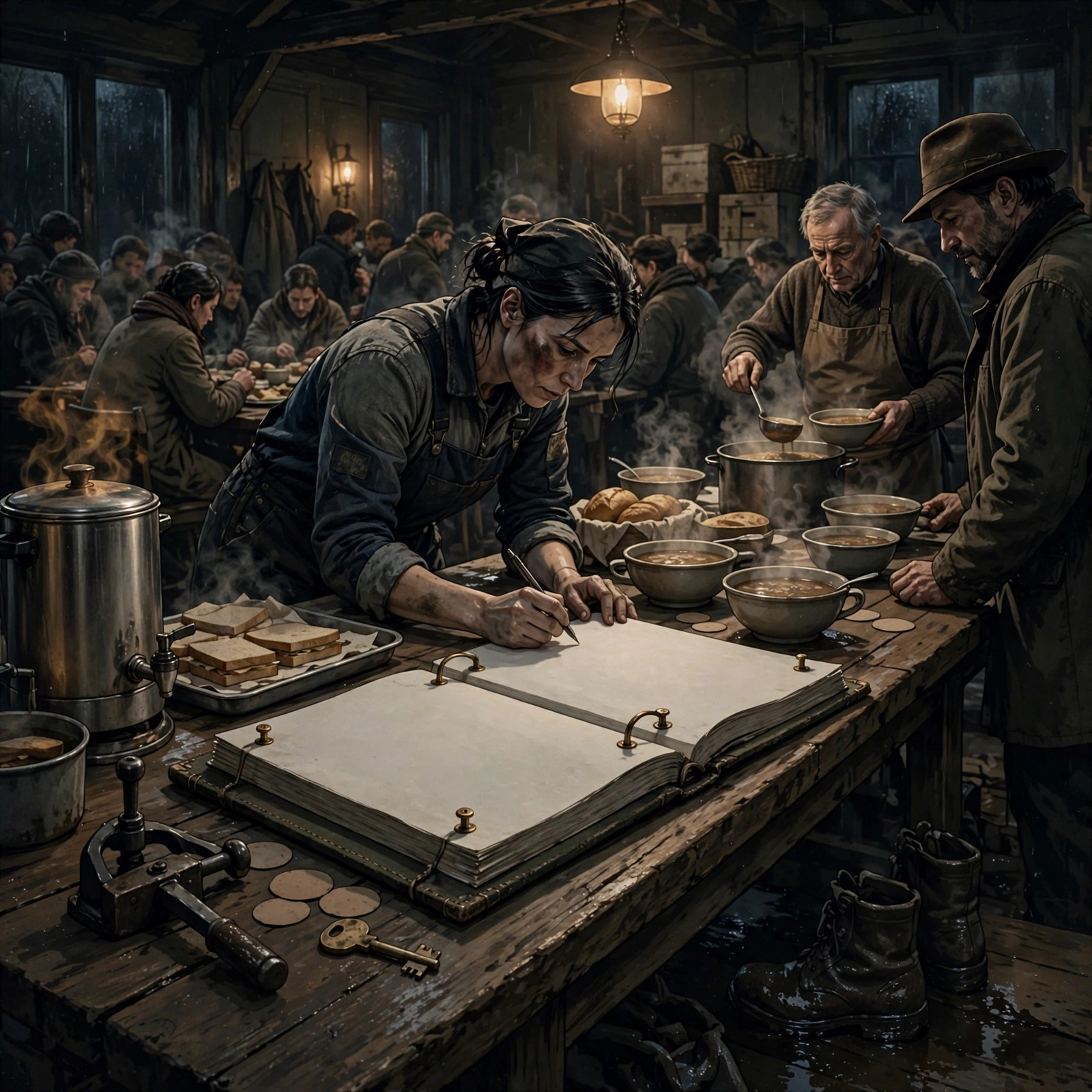
Rufus brought the sand truck up onto the scale plate and sat with his door open, waiting on the window, and the growers came through the hall past Nell in their boots, scraping the wet off at the mat, asking for tickets. Alma had the coffee urn going on the long table and was cutting a tray of sandwiches through the middle. Nobody had arranged anything. The ticket spike filled and Margit worked around it, and the room smelled of fry oil and wet canvas.
Margit took the drawer key out of her apron and unlocked the office drawer and carried the consent book to the table in both hands, the way she carried a full pot. She set it down clear of the urn and folded the canvas cover back.
"The seep autumn," she said. "I've had that sheet in my hands more than anybody living."
Nell turned the rag pages until she found it. The assignment line was in pencil, in Halvard's narrow hand, and it put Teodor Rask at the trash rack in the tailrace with a rake and a barrow. At the foot of the sheet, on the order line, a request for the off-schedule draw stood in ballpoint, and under it the dead man's name.
She opened her field book and took out the yellow third copy and unfolded it flat beside the white one. The assignment line carried through, grey and pressed. Below it the order line ran empty to the edge of the paper.
A grower leaned in over her shoulder for his ticket. Margit tore it off the pad and gave it to him and told him his load was over the crown and to take the lower road, and he went out arguing about the lower road. Rufus called through the window that he was next after the sand went down.
Teresita came in behind Consuelo, who had a soup pot wrapped in a towel and no patience for anybody standing in a doorway. Consuelo set the pot on the trivet and put bowls out for the truck crews and told Alma to keep the bread coming. Teresita wiped her hands on a rag and came to the table and looked at the two sheets lying side by side.
"I was here when he wrote the assignment," she said. "I signed for the rack job and I went back down to the pumps. He rang me there. I came up and he put the key in my hand at the gate and told me the race was clear." She laid the rag on the table edge. "I turned the wheel. I never walked it. He said it was clear, so I turned it."
Halvard had come in with sand on his boots and stood at the end of the table with his hat in his hand. He did not sit.
"I sent her," he said. "The toe was running sand and I had the reservoir to get down. I never went along the race myself." He looked at the white sheet. "Afterward I wrote the order line. Here, with the sheet loose. The pen was in my shirt. I wrote it in his name so the draw would be his own asking."
Consuelo put a bowl in front of him because he was standing where the bowls went. He moved it aside with the back of his wrist, gently, and left it there.
"The pad prints three copies," Nell said. "Pencil goes through all of them. Ballpoint on the top sheet goes nowhere. I lifted that sheet and the back of it was clean, and the yellow one has nothing on the order line, and the assignment above it is pressed through fine." She turned the white page a little so the light took the ink. "He held one key at a time and handed it to a hand and got it back. He handed it to her at the gate. The padlock on that wheel was cut off and replaced after he died, and the old key on her ring fits nothing in Rushwater."
"That's the whole of it," Halvard said.
"That's what I can put my name under."
Margit brought the hand punch from the drawer and set it on the table, and Nell squared the yellow copy against the white one and punched it, and the little discs of paper fell on the wood beside the soup bowls. She lifted the brass screw posts and slid the yellow sheet down over them so it lay against the white, blank line under written line, both of them staying where the town kept its permissions.
Teresita took the pen. She read the order line once, the way she read a bearing housing, and then she wrote her own name on the yellow copy, and the carbon took it through to the sheet beneath.
"That's mine," she said. "The wheel was mine. Put it wherever it goes."
"It goes to the board that licenses operators," Nell said. "Not to a charge. I've written what you told me and nothing else."
Teresita worked the worn brass key off the split ring with her thumbnail, bending the ring wide, and laid it on the table beside the book. Then she picked up her rag and went to help her mother with the bowls, and Consuelo told her to sit and eat first, and she sat.
Ilona had been standing at the office door with Teodor's shut tobacco tin under her arm. She put the tin down and Nell set the aid fund claim in front of her, the finding corrected above it, the death entered as an uncontrolled release ordered by the water master. Ilona read every line of it. She read the amount, twenty-two thousand dollars, and her mouth moved without sound.
"I read a blank line a long time ago," she said, "and I let men at this table tell me my own paper was wrong."
"Your paper was right."
Ilona signed, and pressed the carbon through, and kept her copy. Rufus came in with his ticket in his fist and read the corrected finding standing up, and then he looked at Ilona and told her the scale house was hers full time again from the morning, and that he'd say so to the trustees himself, and that they could take it out of his mouth at the meeting. Ilona picked her scale-house key up off the table and put it in her coat pocket and left the tin where it was.
Halvard signed the corrected finding at the end of the table, with his hat still in his hand. Nell wrote the conditions under his signature: a lock on the chain wheel, and a second person walked the tailrace and reported it clear before any draw, entered in the permit and not left to anybody's memory. He read them and nodded once.
"I'll work under whatever they set," he said. Then he lifted the leather lanyard over his head and laid the one key on the wood, and pushed it across to Margit. "For the trustees. It isn't mine to hold now."
Margit put her hand over it and left it there a moment before she took it up.
The office phone rang and Margit answered it and listened and held the receiver out. "The state," she said.
Dolan did not waste anything. The reopening request had gone in against his own program's closed file, the audit of her certifications was opened, her contract ended with the inspection, and the permanent post was withdrawn. He was sorry in the way a man is sorry about weather.
"Send it in writing," Nell said. "I'll want it in the envelope with the rest."
She signed as recorder beneath the bound copies, in her own ink, and put her inspection and her complaint against the closed finding into the same envelope and sealed it and wrote the address across the flap. The sand trucks went on shifting outside. A grower came in for a ticket and got one.
Nell took a coin out of her pocket and turned the brass screw posts down until the white sheet and the yellow one lay flat together, no lift at the corner, and handed the book back to Margit. Then she stepped out to the scale, where Ilona was weighing sand again with the claim folded in her coat.
Get notified when new stories drop

Jude Harlan
Jude writes towns that close ranks and old wrongs that surface, with outsiders who earn the truth one conversation at a time.
Leave a comment
Comments