

Ossian Hall
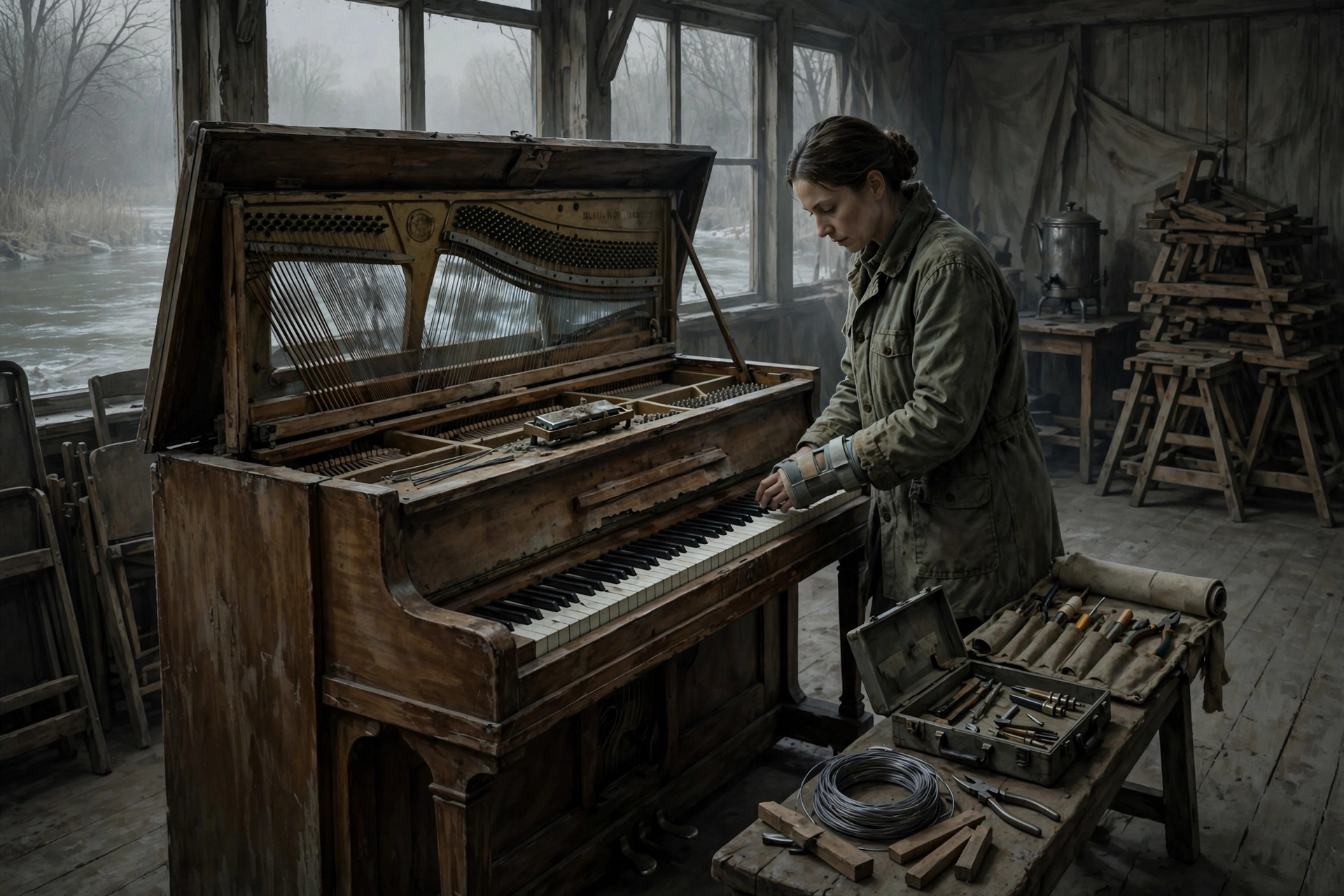
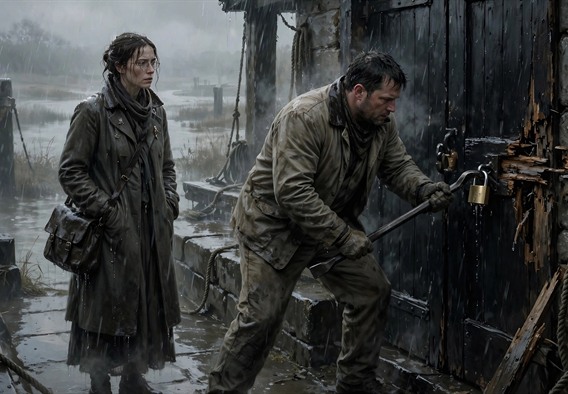
Budge put her shoulder to the hall door and it gave with a crack like ice leaving a bucket. Cold came down the steps past them, cellar cold, river cold, and under it the smell of floor wax and coffee gone sour in an urn. Ilse went in ahead with the tool roll under one arm and the tuning case in her other hand, and the boards complained under her boots all the way to the stage end.
"Heater's out," Budge said. "Heater's out till somebody chooses to light it. You'll work in your coat."
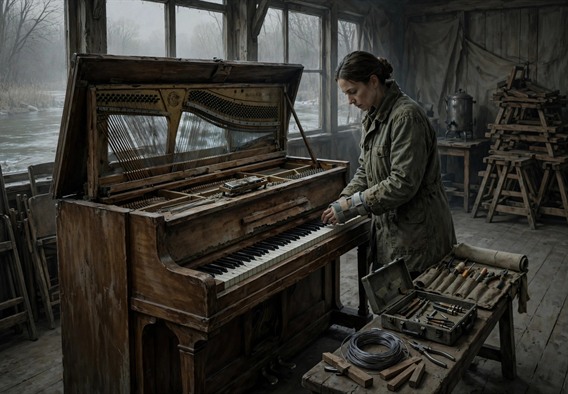
The upright stood against the stage wall under a dust sheet the colour of dishwater. Ilse set her case on the boards and pulled the sheet off, and the dust rose and hung in the light coming through the high windows. Below the floor, under the pilings, the Tallisaw went on working at the lock, a sound like somebody breathing in the next room.
Budge did not look at the piano. She looked at Ilse, which was how Ilse knew the terms were coming.
"The co-op books every hall and church from Quarry Bend down to the mouth. Every one. They don't drop a piano, they drop a circuit. Keep them happy and the river's yours, and I'll sell you the truck and the round and never lift a hammer again. Make them unhappy and I've got nothing to sell." She rubbed her thumb along the seam of her coat cuff. "I'm not carrying this another winter."
"I know what a booking's worth."
"You know what a tuning's worth. It's not the same arithmetic."
Wendell Ock was already in the hall, in a chair somebody had left at the edge of the stage, coat buttoned, cap on his knee. He had not heard the door. He had not heard the truck either, and Budge had to step into his line of sight and say his name loudly before he looked up and nodded at her and then, longer, at Ilse.
"I'll watch," he said, in the flat loud voice of a man who could no longer hear his own volume. "Don't tell me. I'll watch your hands."
So he sat through the opening of it the way men sit at a bedside. Ilse lifted the lid, folded back the fallboard, and worked the front panel screws out into her palm, and Wendell's eyes went to her fingers and stayed there. She set the panel leaning against the case. Inside, the plate rose grey and grand, lettered Beckwith & Sons, a works downriver that had gone out of business before the lock was rebuilt, and the strings ran up it in their bright ranks with the dust lying along the felt.
Rosalind Kegg came in with a folder against her chest and her glasses pushed up into her hair.
"You're the piano."
"I'm the piano."
"The winter dance is in this room and the supper is in this room, and the tables go where the piano isn't." She had the folder open before Ilse answered. "How long will the case be standing open? I've got to tell the kitchen when the floor's clear."
"It'll be shut before your tables come in."
"That's what the last one said." Rosalind wrote something short. "He was wrong, but he said it."
Ilse sat on the bench, worked the mute strip in, and went up through the low tenor with the wrench and the hammer, listening for the beats to slow and stop. Most of the section came to her honestly, flat from cold and neglect, nothing that a pass wouldn't cure. Then one note gave her a dull knock with no ring behind it, a sound like a knuckle on a door, and the hammer felt the string go slack and lazy under it.
She leaned in with her light.
The wire on that note was yellow. Not the yellow of old steel gone dirty, but the soft dull yellow of a coil hanging in a hardware shop, and where it turned around the hitch pin somebody had made the loop by hand. It was a good loop. The eye was closed neat and the tail was trimmed close and the coils sat down snug against the pin, the way you do it when you have been shown properly and have practised. Beside it, its neighbours were bright hardened steel, and the difference was the difference between a nail and a needle.
Brass would stretch. Brass would go on stretching every time the hammer came down. You could tune that note all afternoon and it would be dead again by the time the fiddlers arrived.
Ilse looked for the spare-wire hook on the inside wall of the case, where a coil should have hung since before she was born. The hook was bare. There was a clean ring in the dust where something had hung on it for years and had stopped hanging there.
She sat back. "Somebody's strung this note with hardware brass," she said. "Hand-looped. And your spare hook's empty."
The hall offered her nothing. The heater ticked without being lit. Rosalind's pencil stopped and did not start again.
Denny Farrow had come in the far door with a scuttle of kindling for the stove, and he set it down on the boards without hurry. "Leave the low one," he said. "That's been false for years. Nobody dances on it."
"It's not false, it's brass. It'll pull the note next door out with it."
"Years," Denny said, and picked the scuttle back up, and went out through the far door towards the lock, where his hours were.
"False we can dance to," Rosalind said, and turned a page.
Junia Sarn came in with the heater key on a loop of string around her wrist and a white tin under her arm. She knelt at the heater first, and the burner caught with a soft cough, and warm air began to move the dust around. Then she opened the first-aid box on the wall by the door, took out a rolled bandage gone yellow at the edge, put a fresh one in, and shut the lid.
Only then did she come to the piano. She stood where she could see the string Ilse's light was on, and she did not lean in.
"Leave that note alone," she said. Her voice was quiet and even, the voice for telling somebody what was going to happen to them. "Please."
"It's a hardware wire. It's not going to hold."
"It's held."
"It's held the way a wet knot holds." Ilse kept the light steady. "Who strung it?"
Junia looked at the loop, and at the hitch pin, and at Ilse's hand on the wrench. "It went false the night of the high water," she said.
Ilse let that sit. Years, the man with the kindling had said, and gone out with his scuttle. The night of the high water, said the woman with the bandages. Nobody in the room seemed to hear the two of them disagree.
"Junia minded my string box," Wendell announced, loudly, to nobody in particular. "Best hands with a hitch loop I ever taught. Her and you." He looked at Ilse with mild pride and no hearing at all. "You two."
Junia did not answer him. She had gone back to the first-aid box and was pressing the lid though it was already shut.
Ilse turned on the bench and reached back behind the key bed, feeling along the shelf of dust for a dropped coil, for the tail of the cut steel, for anything the case had kept. Her fingers went over a screw head, a moth, a folded scrap of paper. Then over something small and rectangular and stiff, gritty along its edges, cold in a way the wood was not.
She brought it out into the light. A harmonica. The covers had gone dull as pewter, and the comb was swollen and dark, and there was river silt dried hard in the seams where a thumb would have wiped it clean if the thumb had been able to reach.
She set it upright on the music desk, in the middle, where the player would have to move it to open a book.
"Whose is this?"
Rosalind closed the folder and said the tables would not measure themselves. Budge went to the high window and stood looking down at the lock wall with her hands in her pockets. Wendell watched Ilse's fingers, and then made a point of watching his cap instead. Junia picked up her white tin, and said there was a run to the county hospital, and went. Somewhere below the floor the water kept on going through the gate that was tagged out of use.
The panel leaned against the case with its screws in Ilse's palm. The brass note sat yellow among the steel. The harmonica stood on the music desk with its silt showing, and the hall got warmer and emptier, one reason at a time.
The Kitchen Drawer
Ilse set the harmonica on the corner of the flour board, and Verity Tullis stopped the roller halfway through a sheet of pastry.
"Reeder & Sons." Verity did not put out her hand. "He got it off the mail rack when he first signed on the tow. Could only play in the low keys. Drove the dancers half mad, and they'd have missed it if he stopped."
The covers had gone the colour of old pewter. Ilse turned it with a fingertip so the window light went along the seams, where the river silt sat hard and grey, and she thought about how a thing gets behind a key bed and stays there through every dance since spring.
The screen door banged. Clemence Tullis came in with the landing still on her boots and her jacket dark to the elbows.
"That's Bo's," Clemence said. "Say it's Bo's."
"I said what make it was."
"You said the make. Anybody could own that make." Clemence came to the board and looked down at the harmonica and did not pick it up either. "Say his name over it, Ma. Once. Out loud, in front of somebody who isn't from here."
Verity laid the pastry over the tin and pressed the edges with her thumbs. "There's a dance to feed. There's a kitchen contract that says I feed it. I've had all the trouble I can carry and keep this room."
"Then let me carry some."
"You carry a berth on a tow that pays for this stove." Verity slid the tin into the rack. "Go and dry your socks."
Clemence went out through the pantry, hard enough to swing the flour tin on its hook, and the room settled into the smell of fat and peel. Ilse flexed her right wrist and felt the thick hot pull under the bone. The brass note had stretched under the wrench yesterday and the wrench had kicked back, and she had gone on winding because the string was refusing to hold, and now the joint had swollen overnight into something that did not belong to her.
Junia Sarn came in with the aid bag over her shoulder and her hair flat from a hat. "The hall key. I've got the tables to shift and nobody will open up for me."
Ilse got it out of her coat. Junia took it, and her eyes went to the flour board, and came off it fast, the way a hand comes off a stove.
"Let me see the wrist."
"It's a piano. Not a barge."
"Sit down and give it here." Junia set the bag on the chair, took out a splint and a roll of bandage, and laid Ilse's forearm along the board with the flour pushed aside. She worked fast and without commentary, and she tied the bandage off with a small tight hitch, and Ilse looked at the hitch and knew it. It was the loop you put in a wire end to hold it while you wind. Wendell Ock had taught it to her at a bench in Quarry Bend, standing over her, shouting because he could not hear himself.
"Don't work it today," Junia said.
"I've a church instrument and a hall to finish before the dance."
"Then finish it left-handed." Junia snapped the bag shut, and the hall key went into her pocket, and she was gone before the screen stopped moving.
Verity watched the door. "She took her medic ticket the year after Bo drowned." She said it flatly, the way she would have said the price of eggs. "When the mill man went down in his yard, it was Junia knelt in the wet grass with her hands inside his chest. He was at his daughter's wedding in the summer. Nobody in this town says a word against that girl and nobody ever will."
"I didn't ask them to."
"You've a look like a question." Verity held out her hand at last, palm up, and Ilse put the harmonica into it, and Verity closed her fingers and stood a moment with them closed. Then it went into her apron pocket, deep, and she wiped the flour off her wrists.
She opened the drawer under the board, the one with the twine and the bacon receipts, and took out a letter folded in thirds and pushed it across.
"Read it and then tell me again what you're going to do."
The letterhead was the small boatmen's fund. The typing was neat and the signature under it was Rosalind Kegg, secretary, for the board. Ilse read it standing.
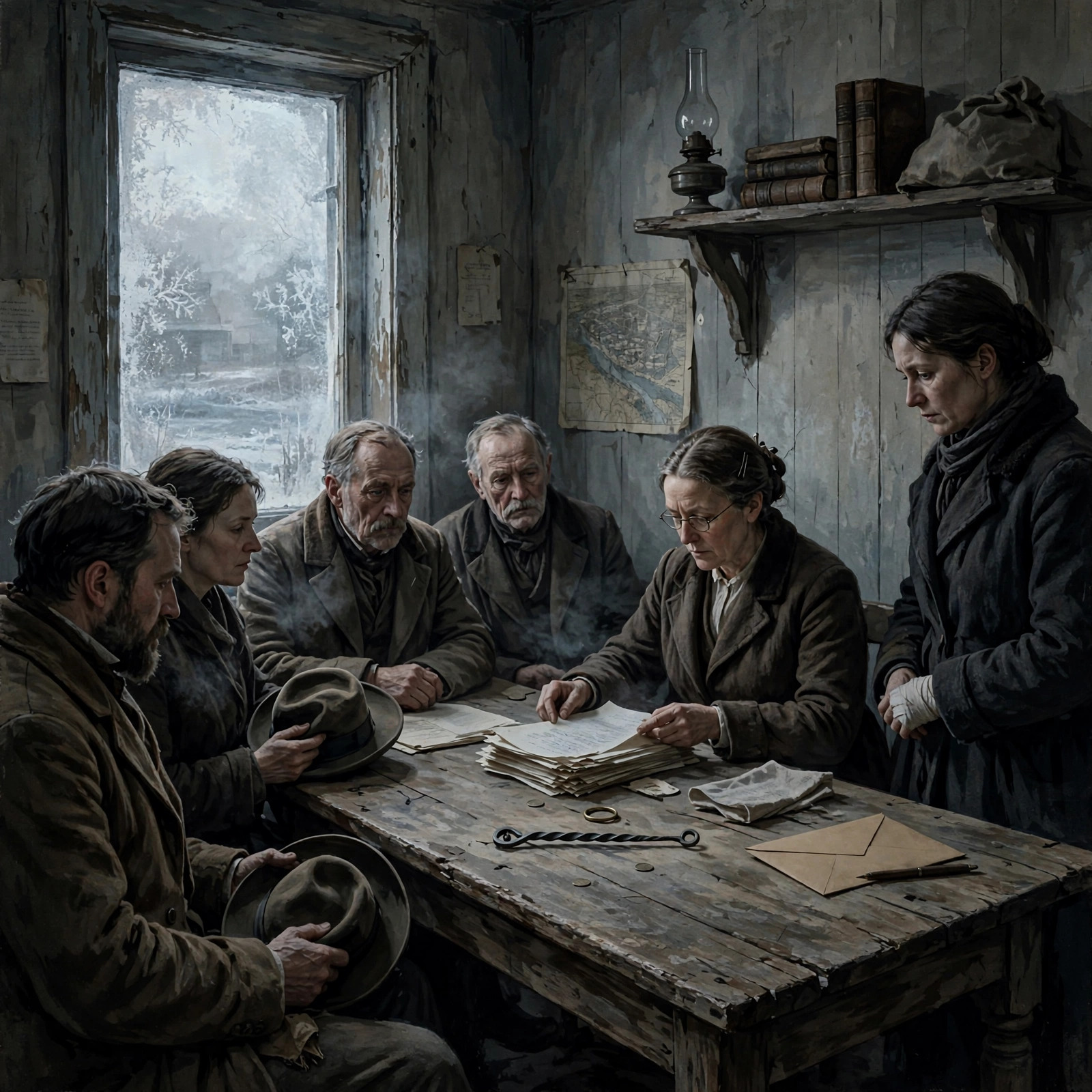
The board had considered the claim of Verity Tullis in respect of her son, Bo Tullis, deckhand. The board accepted the finding of the inquest, that the deceased came upon the lock wall at eleven o'clock in a state of intoxication and met his death by misadventure, the said death not arising in the course of his employment. The benefit of twelve thousand dollars was therefore refused.
Misadventure. Ilse had heard the word from a state man once, in a corridor, about a fellow who fell off a grain chute.
"Eleven o'clock," she said.
"That's Gideon Sarn's hour. He gave it to the state man on a paper and I have never once had the chance to set my name beside it." Verity took the harmonica out of her apron and laid it in the drawer, on top of the twine, and shut the drawer with her hip. "Bo came to that door with his plate. Standing where you're standing. He'd a bottle of ginger beer in his hand because he knew what I'd say if he had anything else, and he asked me to keep him a piece of the pie because he'd be late off the wall. He was going down to dog a line for the tow. Then he went. That's my hour, and it isn't in any letter."
"The board can hear you."
"The board hears Gideon." Verity pulled the roller back to the pastry. "You want me to swear it, and I'll tell you the same as I told Clemence. My kitchen feeds this town because that man's word holds. You go pulling at it and see what falls on all of us."
Ilse folded the letter along its old creases and put it inside her tuning case, under the felt, where the wedges lived.
The path down to Rennick Lock ran between frost-bitten nettles and the co-op's fuel drums, and the river was low and brown and going fast in the middle. Gideon Sarn was in the shop doorway with a mug in both hands, holding it the way you hold a mug when your fingers will not close on a handle. His knuckles stood up like knots in a rope.
"You're the piano woman."
"Ilse Noy. Budge sent me for the round."
"She'll want the hall done proper. There's a dance." He drank, and looked at her over the rim, and he was not a stupid man; she could see him deciding how much she already had. "You'll be asking about the boy."
"I'll be asking."
"He came off the dance at eleven o'clock," Gideon said. "Full of beer and harmonica noise, and I told him to keep off the wall, and he waved at me. He went out along it in the dark like a man walking a plank for a wager. That's the whole of it. The gate never moved after the last tow passed through. Nothing was worked on that lock that night after the tow was down."
"Who worked it before?"
"The tow went down and the lock was shut." He shifted the mug. "You want it in writing, you go to the state. Their file's closed. I've said it to them and I've said it to the fund and I'll say it to you and then I've a lock to run."
Ilse walked out along the wall because there was nothing stopping her; nobody had the right to stop a woman walking. The brass plate was set in the concrete at the bend, where the boatmen would pass it going to their moorings. Names stamped down it, letter by letter, the older ones softened with weather, a man lost off a grain scow, a man lost in the ice year, a woman's name that surprised her. At the bottom there was a line ruled and left blank, the brass still bright inside the grooves.
She stood there long enough for the cold to come up through her boots. Then she went back along the wall to the lower gate, where a card hung wired to the linkage, soft with weather, the printing gone but the words still legible: OUT OF USE. DO NOT OPERATE. Below it the shackle sat in its bracket, greased heavy and black, and the grease had been laid on thick and recent, and there was something in it that was not the shape a pin makes.
"Old damage," Gideon called from the shop door. He had come out to watch her. "Linkage took a knock in the high water. It's been tagged since. There's no money in the budget for a machinist to come and tell me what I already know."
"It wants opening."
"It wants leaving." He said it without heat, almost kindly, and went back inside where it was warm.
Ilse stood with her splinted hand in her coat and the wind coming down the Tallisaw, and thought about a hitch tied small and tight by somebody who had been taught it at a string box. Then she went up the path to fetch her case, and the letter lay folded under the felt where she had put it, and down at the bend the bottom line of the plate was still blank.
Ock's Hardware
Nadine Ock took the brass coil down off its nail and let it thump on the counter between them.
"Soft," Ilse said. "Off the coil, not the spool by the register."
"That's hardware wire. That's for hanging a sign and tying up a latch." Nadine drew a length across the wood and set the cutters to it. They hung on a loop of twine beside the scale, worn shiny at the throat. "You'll not tune anything with it."
"No."
The cut length lay bright on the counter, still bent from the coil. Ilse took it in her right hand and drew it round her finger and felt it give, no spring in it at all. Her left hand sat in its splint, warm and useless, and she had been carrying it about since the medic taped it up like a parcel she was afraid to set down.
"That's the wire," she said. "That's what's strung in the hall piano."
Nadine hung the cutters back and kept her hand on the twine. "Then somebody's been in my shop." She looked at the coil, and at the doorway, and the rain coming off the step. "Night of the high water. After I'd shut. Somebody knocked and asked for brass off this coil, and I cut it in the doorway with the lamp on the step."
"Who?"
"A shape in a coat. It was blowing sideways." Nadine wound the end back round the coil and hung it up. "They said a thing was jammed and they had to pin it to make it work at all. I said take what you need, I've a father in the back who can't hear the river coming up."
"Man or woman?"
"I'm not going to guess at it." Nadine's voice went flat and careful, the voice she used for prices. "You need a name, ask at the lock. I sell wire. This is the only counter in Rennick Landing that sells it by the length, and if I start handing out who bought what on what night, I'll have nobody coming through that door."
From the back of the shop, where the stove was, Wendell Ock said, too loud, "Who's buying brass?"
"Nobody, Dad."
He came forward with his paper folded under his arm and stood where he could see Ilse's mouth. "You're Budge's tuner. Say it again, and look at me while you say it."
She turned to him and said it again. Somebody had bought brass off that coil when the river was up.
Wendell nodded slowly, as though she had confirmed something he had been sitting on all morning. "The Sarn girl could splice a string," he said. "When my ears began to go I couldn't hear a false beat, and a man who can't hear a false beat has no business with his hands inside a piano. So I let the young ones mind the string box at the hall. She was the best of them. I stood at that upright with the lamp on the key bed and taught her the hitch myself. Loop over the pin, back through its own eye, snug it down, cut it close." He turned his own hands over and looked at them. "Small hands. Strong. She could pull a twist tighter than I could at the end."
"Who else did you teach?"
"You." He smiled at her with his head tipped, listening for the shape of it rather than the sound. "And Gideon Sarn never could. His hands haven't made a tight twist in years. He brings me his hose fittings to do up because he can't close on a wrench past the middle of the day. He'll tell you different."
"Dad. Sit down."
"I am sitting down," he said, standing.
Ilse put the money on the counter and the brass in her coat pocket and went down through the wet grass to Rennick Lock.
The shop smelled of grease and stove iron. Gideon had a mug at the bench and the grease jar open beside it, the black kind, the kind you lay on with a finger. Denny Farrow stood by the door with his cap still on.
"I need a rag," Ilse said.
"You need the state. Their file's closed."
"I need a rag."
Gideon pushed the rag box along the bench with his elbow, which was as near as he would come to helping her, and she took a rag and went out to the lower linkage with him after her, saying her name once, low, the way you say a name to a dog you would rather stayed on the porch.
The card hung wired where it had hung since the spring, soft with weather, the printing gone but the words still legible. OUT OF USE. DO NOT OPERATE. Ilse knelt on the cold concrete and wiped the grease back off the shackle. It came away on the rag in thick curls. Under it the bracket held no pin. It held a twist of bright wire, blue-grey, hard enough that her thumbnail slid off it without marking it.
She wiped further, working the rag into the bracket with the edge of her thumb. The wire went through the shackle and round and back on itself, pulled tight, the ends cut close, and on the standing part there was a small closed loop. An eye. The eye a string is hitched by. She had spooled miles of that wire. There was a coil of it in the bottom of her case at every hall on the circuit, and she knew the temper of it, and she knew what a machinist's pin looked like, and this was not that. It was a whole piano string, cut off with side cutters and twisted through a sluice shackle by somebody who had been taught how a string is hitched.
"That's a hitch-pin eye," she said. "That's music wire, Gideon."
"Machinist from downriver did that." He stood over her with his hands in his coat. "Linkage took its knock and he pinned it to get the gate shut. I've said so to the state and I've said so to the fund."
"A machinist pins with a pin."
"Then he was short of pins."
"Where's his bill?"
"There's no money in that budget and there never was." He did not raise his voice. "You've a splint on your hand and no standing here. That gate is tagged. A machinist opens it and writes down what he finds, and the operating certificate goes, and the tow work goes with it, and this stretch has no lock and no wages on it. You'd be doing worse than what's been done, and you'd be doing it from a tuning bench."
He went inside. She heard the bolt, and then the hasp, and the padlock, and Denny was out on the step with the door shut behind him.
"I stood that gate," Denny said. "All that night. From the last tow down till it was light."
"The fund put it at eleven o'clock."
"Then I was there at eleven o'clock." He said it fast, and pulled his cap down. "Nobody worked that linkage. I'd have seen anybody on it."
"Where were you standing?"
"On the wall." He wiped his mouth with the back of his wrist. "It was blowing hard. I was in the truck with the heater going, but the window was down. I'd have heard boots on the plates."
Ilse looked at the truck. It sat on the gravel with its nose to the road, and the lower linkage lay behind the shop, and the path down from the hall came in behind the shop as well.
"Can you see this bracket from your cab?"
"Yes."
"Denny."
"You'd have to come round the shop to get at it," he said, and heard himself, and stopped.
His hand went to the door handle and stayed there. "Ask Gideon," he said. "He'll tell you I was on that gate. He'll tell you the hours." He got in and shut the door and sat with both hands on the wheel and did not start it, and Ilse stood in the wind with a rag of black grease in her fist, understanding that she had frightened a man who had nothing to spare.
She went up the path to Ossian Hall. The caretaker had the doors open to let the stove smoke out. Chairs were stacked along the wall and the trestles were waiting for the supper, and a woman from the co-op was sweeping the stage end, pushing the grit toward the door in long strokes.
Ilse set her case on the stage and took the front off the upright and laid it against the boards. The brass sat where it had sat, looped over its hitch pin by somebody who knew the hitch, dull now, gone dead in the case's damp. She held the felt back with her splinted hand and worked the cutters with her right, and cut at the pin, and then at the hitch, and the wire came away slack in her fingers without a sound. No ring in it. Nothing to give.
She wound it into a small coil and put it in a paper envelope and set the envelope in the case on top of the fund's letter, folded flat.
Then she pressed the key. The hammer rose and fell and struck nothing at all, and the damper lifted on silence.
The broom stopped.
"What have you done to it?" the woman said.
"Taken out a wire that was never its wire."
"She leans on that note. Junia. She starts the dance on it and the whole floor comes in behind her." The woman came and looked into the open case as though a tooth were missing from a face she knew. "That's not a small thing to take out of a hall."
"I'll string it before the dance."
"You'll not put back what was in it."
"No," Ilse said.
She left the front off, so the gap would show to anybody who came in to stack the chairs. Behind her the broom went on across the boards, and stopped, and she heard the key go down under the woman's thumb and come up again with nothing following it. Ilse latched the case on the brass coiled in its paper envelope and the letter folded flat beneath, and carried it out past the trestles, leaving the hall with a hole in its voice.
The Ada Bell
Ilse came over the Ada Bell's rail sideways with her case hooked in her right hand, and took the ladder in her own time, because the rungs were wet and her left hand was still strapped in the splint Junia had made for it. Frost had come in the night and gone out again and left the deck black. Aft, Clemence Tullis knelt over a coil of line with a fid in her fist. She did not look up. Then she did.
"You're the piano woman."
"I am."
"You've been taking things out of the hall piano." Clemence set the fid across her knee. "Come in out of the wind. He's been in the wheelhouse since the light came."
The wheelhouse smelled of diesel and burnt coffee. Hobie Drury stood at the chart shelf with his cap still on, a mug going cold under his hand, and he moved a folded chart to make room before she asked him to. Ilse laid her account on the shelf and weighted its corner with the mug: the page she had written in the truck with the heater running, the tow against the wall below the lower gate, the gate shut behind her, the water flat, and under all of it the word the fund had typed, and the hour it had typed beside the word.
"You had her against the wall that night," she said. "In the freshet."
"I had her there."
"Then you saw the water come."
Hobie turned the mug a little on the paper. Out on the deck the line creaked as Clemence worked it.
"I saw the after."
"The after doesn't drown a man dogging a line. Somebody puts a barge on a wall in high water and the barge takes what's under it. That's the whole of my arithmetic, and I've carried it up and down this town for days, and every man I show it to looks at his boots."
"They'd look at their boots." He said it without heat. "You've got the hour right, anyway. Eleven o'clock. She surged at eleven o'clock and came off the wall and went down on the lower gate, and Bo was out there with the line."
"You're certain of the hour."
"I'm certain of it." He looked at the window instead of at her. "Clemence raised me on the set. I was standing in the hall door with my coat on."
The stove ticked. Ilse kept her hand flat on the page.
"In the hall door."
"At the supper." He took the cap off and put it on the shelf, and it was the first thing he had done that looked like a decision. "I was ashore. I'd come up for the supper and I was standing there listening to Junia play, and the set went in my coat, and I ran down the path with my mouth still full. I should have been aboard her. That's the truth of where I was, and I've never said it in a room with a clerk in it."
Clemence had come to the door. She stood with the fid still in her hand.
"Tell her the rest, Hobie."
"She'll get it out of the office anyhow."
"Tell her, or I will."
"I've been giving your mother money," he said to the window. "Every trip since. It comes off my pay before I ever see it. Rosalind takes it out and hands it over in the kitchen and writes it down, and I've never asked her to write it any particular way."
Ilse looked at the page under her hand and felt the shape of it change without a word of it altering. Water had moved at eleven o'clock, after the last tow was through, and the gate Gideon swore had never moved had something moving under it. She heard herself say, "Whose money is it, if it isn't the fund's?"
"Mine," Hobie said. "It's mine. There's nothing in the fund for her. There's a letter telling her so."
She carried the letter up to Ossian Hall with her account folded inside it, and the co-op board let her in because the state's river man was already at the table with his folder open and a pen laid across it. The hall was dark past the back room door. Chairs stood stacked along the wall, and the upright sat at the stage end with its front off and its gap showing, and nobody had touched it.
Rosalind Kegg had the fund's ledger squared in front of her, and she opened it to the pay page before Ilse asked. The deduction was there in her small upright hand, trip after trip, and beside it the kitchen receipt.
"His pay," Rosalind said. "Not a penny of the fund's. I've kept it clean because it was the only clean thing anybody was doing."
Ilse laid the denial letter flat on the table and her account beside it, and she named the tow. She named the pilot ashore and the barge on the wall in high water and a deckhand sent out to dog a line with no warning given, and she asked for the finding to be opened. The river man wrote it as she said it. He read it back to her in the flat voice of a man who has read a great many such pages, and he asked her twice whether she would swear to it, and she swore, and signed with her right hand while the left lay useless in her lap.
It took less of the afternoon than she had expected. That was the part she had not allowed for. The river man laid the Ada Bell up pending review before he left the table, and the co-op's own man went out to the dock with a list, and Clemence was taken off the crew because a laid-up tow carries no deckhand, and by the time Ilse came down the hill there was a notice being nailed to the kitchen door of The Drover's Rest.
Gideon Sarn was standing at the corner of the hall with his hands buried in his coat, and he had been standing there long enough to have heard all of it.
"You've a hand for arithmetic," he said. "Use it on this. The tow's tied up. The girl's off her berth. The kitchen's shut. That's what your signature took out of this town before the supper's even cooked."
"A man is still called a drunk on your wall."
"Count it before you sign anything else." He worked his shoulders against the cold. "You'll not be here to count it after."
Verity Tullis had the kitchen door open on its new nail and the notice hanging crooked from it. She did not tear it down. Inside, the ranges were banked and the trestle trays stood empty on the rack, and she pulled the drawer out and looked at the harmonica lying in it and pushed it shut with her hip.
"You want to know what that kitchen was worth," she said. "I'll tell you, since you're the one who spent it. It kept my house. It paid the coal and the roof and Clemence's shore time when the tow was down. It was the only money coming into my family that didn't come off the water, and the water took my son, and now the water's took the kitchen too, and you did that with a pen."
"I did."
"Then don't stand there waiting on me to be gracious." Verity wiped her hands down her apron, slowly, the way she must have done ten thousand times. "You've moved him off drunk. I'll not pretend that's nothing. But my boy's name is still not on that plate, and I've a door with a nail in it, and I can't feed anybody out of a word you wrote in a back room."
Ilse went out. The wind had turned and the dock boards rang under her boots, and Clemence's seabag sat on the stringpiece with its strap coiled on top of it, waiting for a berth that was not there. Past the co-op shed the notice hung on the kitchen door, one corner lifted, tapping the wood whenever the gust came.
The Lower Gate
Ilse came down the lock ladder with her case slung across her back and her splinted hand held clear of the rungs. Frost had taken the iron. Below the wall plate the river worked at the shelf ice with a sound like gravel poured out of a sack, and the lower gate stood black and streaming where the leak had run all autumn.
She set the case on the coping and opened it with her good hand. The brass came out of the felt pocket first, the length she had cut from the hall upright, and she laid it straight on the stone with a tuning pin across it to hold it against the wind. Then the steel, still twisted, the hitch-pin eye intact at the end of it. She laid that beside the brass, close enough for one light to take them both.
Gideon's boots came along the wall above her. He had the storm lamp. He set it on the ledge under the plate and turned the glass until the flame fell down onto the stone.
"You'll break your neck on that ladder."
"Look at what's on your wall."
He looked. He was a long time about it. The wind kept lifting the tag on the sluice spindle and laying it back down.
"Brass," Ilse said. "Off the coil at Ock's Hardware. Soft stuff, solders instead of singing. It was hitched into my piano by a person who knew how a string is hitched. Loop seated right, coils wound right, brought up near enough to pitch that a man walking past the open case would see a full set and shut the lid." She turned the steel with her little finger. "This came out of your shackle. Beckwith gauge, hardened, cut with side cutters and twisted tight by a hand small enough to get down inside the linkage. Whoever pinned your gate strung it out of my piano and left hardware brass behind so the theft wouldn't show."
"A machinist came up from downriver that spring."
"A machinist carries pins. He doesn't carry a splice he learned at a piano."
Gideon crouched, and his knees went down badly, and he stayed crouched because getting up again would have been worse. His hands were in his coat. They had been in his coat every time she had seen him.
"Wendell Ock taught that hitch to anybody who'd hold the cutters for him," she said. "He taught it to me. He'd have taught it to half this landing."
"He would."
"Who stood the gate?"
The river went on with its gravel. Gideon moved the lamp a little, though it had not needed moving.
"Denny's hours are mine on the book. Have been since his boy came. I write them, I sign them, the state reads a night tender who never sat a night. He was asleep in his truck with the heater running and he's lied for me because I fed him for years." He wet his lips. "That's your Denny. That's all of him there is."
"And you."
"I went up to the hall for the dance supper. Verity had the trays out. I left the office in the family's keeping and I ate a plate of pork at a trestle table with the whole town watching me eat it."
"Junia minded the office."
"She minded the office."
"Minding an office isn't standing a gate."
"No," Gideon said, and would not go past it.
Ilse sat back on her heels. "The Ada Bell surged at eleven o'clock. Hobie was ashore with a fork in his hand. Water doesn't lift a barge onto a wall by itself, and a man was out on that wall dogging a line, and the sluice ran full while he was out there."
"You've an arithmetic for everything."
"I've a string. Open the shackle."
"No." He said it without heat, the way he would have said it to a lockful of coal barges. "A machinist opens that, he writes what he finds. Then there's an inquiry, and the certificate goes, and the post goes, and the tow work goes with it, and this landing is a place boats pass. And the medic goes. You've seen her run. You've had her hands on you. There's nobody else between here and Quarry Bend with a ticket and an aid bag."
"So the town bought itself a lock and an ambulance with a boy's name."
"The town bought itself what it could afford."
Ilse pulled the splint off. The tape came away with the hair of her forearm and she let it drop into the case. Underneath, her hand was the colour of tallow and stiff as a glove left out in weather. She flexed it twice, took the wrench out of the case with her left, and set the jaws on the frozen shackle.
"Don't," Gideon said.
She hauled. The ice in the seat cracked and gave a little and took hold again. She reset the wrench, braced her boot on the linkage, and hauled with the whole weight of her shoulder behind a hand that had no business bearing anything. Cold steel came up screaming through the frost, and then something inside her hand let go, and kept letting go, a long tearing that ran up past the wrist and did not stop when she stopped pulling.
She heard herself make a sound she had never made at work.
The wire came out of the shackle in a spiral, greased black, and rang once on the stone. Gideon set the lamp down and took the wrench out of her fingers, because they had stopped being fingers that could hold. He worked the jaws into the seat and cleared the frozen swarf, breathing hard through his nose, and his own ruined hands shook on the handle and did it anyway.
Then he went to the shop and came back with a proper pin, steel, shouldered, the right thing, out of a drawer that had held it since before the high water. He drove it home with the flat of the wrench and set the keeper, and the shackle sat there whole and stupid and ordinary in the lamplight.
Headlights swung off the co-op shed and came along the wall.
"Hold that," Gideon said, and put the lamp into her left hand, and went up to meet the truck.
Coralie Budge got out with her coat over her nightdress and her boots unlaced. She looked at the wires on the stone, and at Ilse's hand, which Ilse had laid against her stomach like a dead bird.
"I rang the medic from the shed," Budge said. "Now get in the truck."
"Finish the round first."
"There's no round." Budge's voice was flat and reasonable and it went through Ilse worse than shouting. "The co-op books every hall and church from here to Quarry Bend. Their insurers ask about the contractor. I cannot carry a contractor with an open finding against her, Ilse. Not for a season, not for a month. You've put your name on a state paper about a tow, and now you've been down a tagged-out lock with a wrench, and by the end of the week you'll be the finding. The river goes to a tuner out of the Bend. I've already told him."
"You sold me that route."
"I did. I'll give you your money back and I'll not pretend that's the same thing."
Ilse knelt at her case again. She got the paper out with her left hand and laid the denial letter on the lid, the finding typed into it, misadventure, eleven o'clock, twelve thousand dollars kept in the fund's pocket over a word. She wrote on the back of her own service sheet, slowly, the letters going uphill.
She withdrew her complaint against the Ada Bell entire. She wrote that she had gone down Rennick Lock alone, a civilian with no authority, and had opened a sluice tagged out of use, and had drawn the pin from it with hand tools, and that whatever followed from that was hers. She signed it. The signature looked like a child's, and it was hers.
Budge read it over her shoulder and said nothing at all, which was the kindest thing she had done in years.
Junia came along the wall with the aid bag on her hip and her breath going white. She stopped where the light began. She looked at the brass, and at the twisted steel with its little eye, and at the shackle with a pin in it, and her face did not move, and her hands did not move either, for a breath.
Then she knelt and took Ilse's wrist and turned it over.
"This is bad," she said. "This is a hospital in Quarry Bend and a surgeon who'll be annoyed about the hour."
"Wrap it for now."
Junia wrapped it, quick and expert, thumb testing the pulse, padding the palm, the roll going round and round. Gideon held the lamp and did not speak. Up on the wall Budge left the truck running.
"Be at the hall in the morning," Ilse said. "Rosalind's board sits in the back room. I'm going to the fund, not the state. The fund can undo its own wording on a sworn account, and it will, but only if it's said by the one who did it."
The bandage went round again.
"Said by who," Junia said, to the wrapping.
"You know what my hand's worth. I've spent it. I'd rather you spent your voice."
Junia pinned the bandage and sat back on her heels and looked at the two lengths of wire lying side by side under the plate with its blank bottom line. Gideon took the tag off the spindle and folded it into his pocket, and the gate stood whole for the first time since the high water, water sliding over the sill in a smooth black sheet with nothing holding it back and nothing left in it to find.
Ilse shook the music wire into an envelope with her left hand, and put her statement in after it, and pushed the denial letter down on top, and licked the flap.
The Tuning Mark
The trestles came through the hall door sideways, and Ilse got her hip behind the last one to keep it from stripping the paint off the frame. Denny Farrow had the far end. He set it down along the wall where the boards were stacked for the dance, and looked at her bandage, and then at the floor.
"I can carry," he said.
"Then carry. Rosalind's in the back room. Keep the trestles off my case."
The upright stood at the stage end with its top up and its front off, the strings bare in the grey light coming off the Tallisaw. Her case lay open on the bench: the coil of steel, the hammer, the wedges, the side cutters. Her right hand sat in the splint Junia had put on it out in the cold, and it was good for nothing now but holding a door.
In the back room the fund board sat around the table with their coats still on. Rosalind Kegg had the envelope open and the pages squared in front of her. She lifted the brass loop out with the end of a pencil and laid it on the wood, then the twisted steel with its little eye, and set them side by side where the table could see them.
"That came off the hall piano," she said. "That came out of the lower gate. Both sworn to by the technician who drew them."
"It's my account," Ilse said. "I went down alone, a civilian with no authority, and I opened a gate tagged out of use and pulled the pin with hand tools. I've signed to it. The complaint against the tow is withdrawn."
Rosalind read a line of it under her breath, the way she read everything, and put her pen down.
"The finding is ours. We wrote it and we can unwrite it." She looked round the table. "On duty. On the wall. Working her line."
Hands went up. A boatman at the end kept his down and asked who would carry the assessment, and Rosalind told him: twelve thousand dollars, the co-op's insurers answering now the death was ruled on duty, and whatever they would not cover laid on the boats at the winter meeting. He turned his hat over in his hands a while. Then he put his hand up too.
Rosalind wrote the reversal and signed it herself. She took the old denial letter out of Ilse's case, drew a line through the wording she had chosen in the spring, and wrote the new finding across the face of it, and blotted it, and handed it to Verity Tullis.
Verity read it standing. She did not sit and she did not speak for a bit. Then she folded it into her coat pocket, where the son's harmonica lay; she had brought it up from the kitchen drawer that morning.
Gideon Sarn stood in the doorway with his hands tucked up his sleeves. "Put mine under it," he said. "I left the office in her keeping and went up for the supper."
"The board can't touch your certificate. That's the state's, and their file is shut. They'll come when they come."
"Let them come."
It was a short walk down to Rennick Lock, frost still on the grass in the shade, the water going over the sill in a smooth black sheet with nothing holding it back. Nadine Ock brought a canvas roll of letter punches and a maul out of the hardware. Wendell Ock came behind her in his good coat with his stick. Hobie Drury took his hat off and laid it on the coping. Clemence took hers off and stood with her hair flattened in the cold.
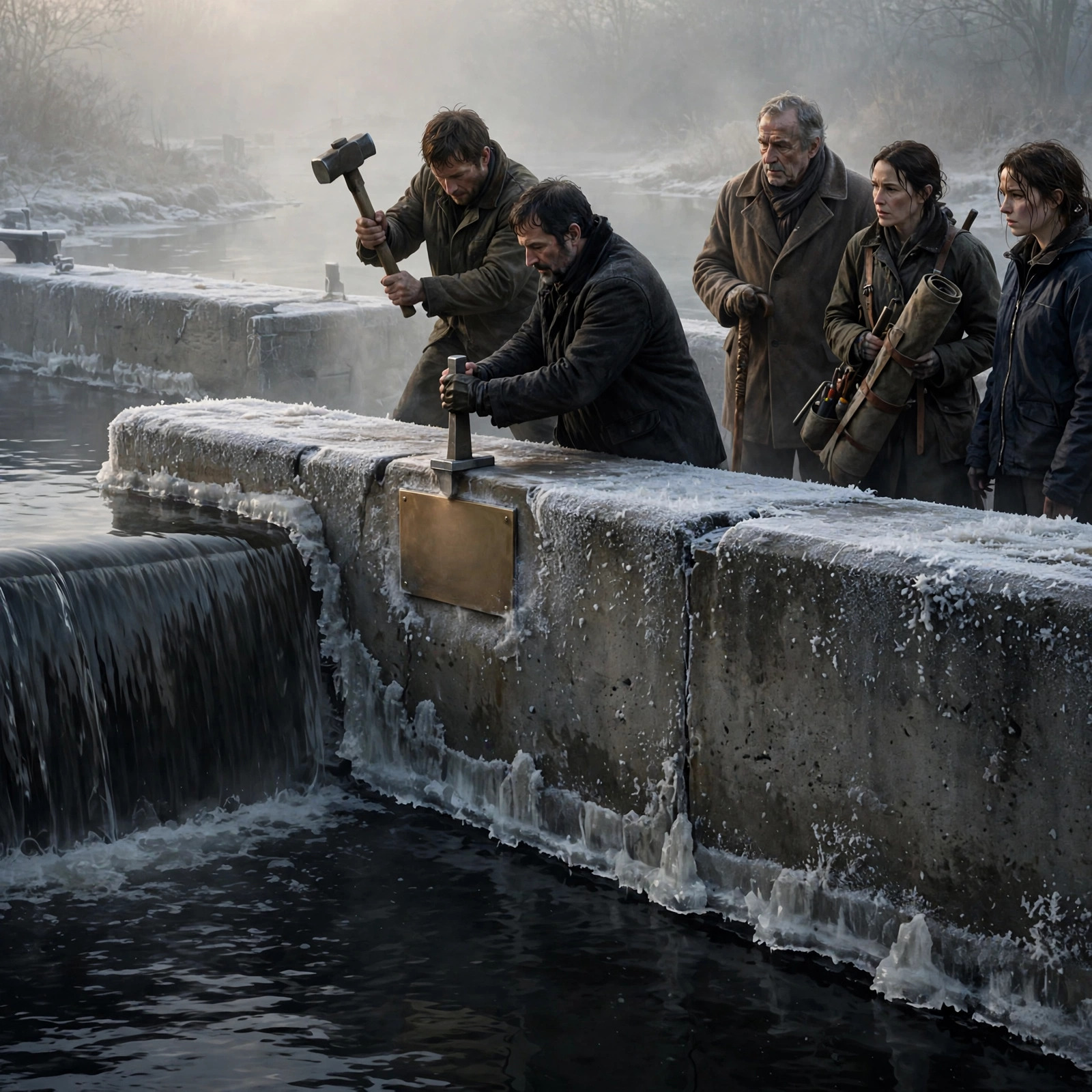
Denny held the punches and Hobie swung. The letters went into the blank bottom line of the plate one after another, the brass curling bright under the steel, the sound of it going out across the water and coming back off the far bank. When it was finished Hobie set the maul down and wiped the plate with his glove.
Clemence read it out loud. "Bo Tullis." Then she said it again, quieter, for herself, and put her hat on.
Rosalind had the minute book under her arm. She told Verity the Drover's Rest contract stood for the dance and through the winter, and told Clemence the Ada Bell went out with the morning and her berth was on her.
"There'll be no more coming out of my pay to you," Hobie said. "Rosalind's stopped it."
"I know. I'd have stopped it myself, only you'd have argued."
Back at Ossian Hall the coffee urn was going and the trestles were coming in steady. Wendell had his palm flat on the piano case and his head tipped, watching Ilse's fingers instead of listening. Nadine stood at his shoulder with the canvas roll still under her arm.
Ilse laid the brass and the steel on the music desk. Junia came and stood at the keyboard with the aid bag on her hip. Verity came round the bench and stood on the other side of the desk, so the wires lay between them.
"I stood the gate," Junia said. "My father was up here at the supper and I had the office. The Ada Bell came up surging and Bo was out on the wall dogging her line. I opened the lower sluice to pull her off him."
Verity waited. Junia let her wait, and then went on.
"I never sounded the horn. The horn would have brought the whole landing down there and finished my father. The pin had dropped out, so I pinned the linkage with a string off this piano to make the gate work at all, and I put brass in the piano so the set looked whole. It stretched under the head of water. The sluice ran full."
"I took his harmonica out of the mud," she said. "I put it behind the keys. I couldn't throw it in the river and I couldn't hand it to you."
"I want it said in the daylight and I want his name on that plate, and I've got both," Verity said. "I'll not take an apology instead of the words. And I'll not have you run off this landing for it. There's people walking about here that you brought back."
She opened her fist and set the harmonica on the music desk, silt still in the seams of the covers. "You'll come to my table and say it again with that in your hand."
"Yes," Junia said.
Ilse braced the side cutters under her arm and cut a length off her own coil, and made the hitch loop left-handed, slow, the wire slipping twice before it lay right. Wendell watched her thumb. "Turn it back on itself," he said. "You learned that on my bench. Bed it down before you pull."
She hooked the eye on the hitch pin and ran the wire up over the bridge and took the turns on the wrest pin, and put the hammer in her left hand with her forearm against the case to steady it. The note came up sour and flat and wavered against its neighbour. She worked it in small pulls, listening past the hall noise, past the trestles, past her own pulse in the splint.
Wendell kept his hand on the oak. When the wavering went out of the note he felt it stop under his palm and lifted his hand off the case, and Nadine saw him do it and let out a breath.
Ilse laid the hammer down and took the pencil in her left hand and wrote inside the case, under her tuning mark and the date, the way she had written in every case on the circuit. Then she went on writing. "Bo Tullis was on the lock wall at eleven o'clock, dogging a line for the Ada Bell, on duty. The lower sluice was opened under him. The water that took him came through the gate."
Gideon read it from the doorway with his hands in his sleeves. "That's right," he said, and stayed where he was.
Ilse set the pencil down on the music desk beside the harmonica and struck the note again. It came up clean and hung there. Verity put her palm flat on the case and left it. The doorway filled with coats and cold air and the men who had carried the trestles, and they stood in it and listened to the note go on ringing.
Get notified when new stories drop

Miles Adebayo
Miles writes investigators who correct the record: insurance files, court halls, and quiet towns with reasons to stay quiet.
Leave a comment
Comments